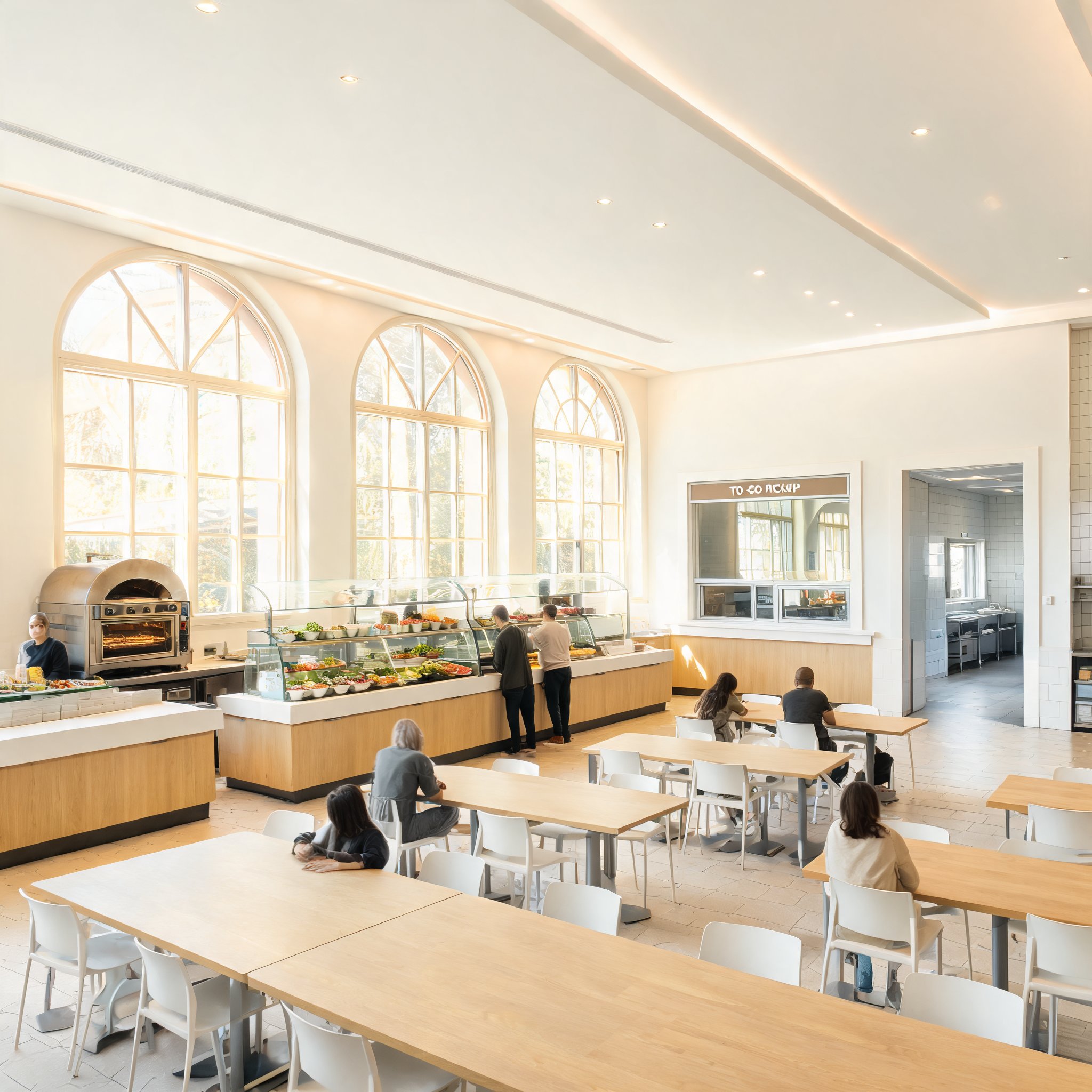
Texas Christian University has reopened its nearly 18-year-old Market Square dining facility as BLUU Dining in the Brown-Lupton University Union, part of a $17 million overhaul of the union. The Fort Worth, Texas, university opened the redesigned venue in August 2026 with 13,000 square feet of dining space and another 4,500 square feet for food platforms and back-of-house operations.
The facility seats 550 indoors and 120 on an outdoor terrace. It has eight food platforms, including a to-go window called Dash that opens into the entrance hallway, allowing students to pick up a premade sandwich or salad without entering the servery. The design team's goals were to create a destination dining spot for students and to increase meal-plan participation as TCU prepares for growth.
Meal counts rise
Less than two months after opening, BLUU Dining was averaging 4,000 meals per day, double the meal counts at the time the old facility closed for renovation in December 2025, according to Jude Kiah, associate vice chancellor for student affairs business and operations. The peak day so far reached about 5,700 meals, and Kiah said the operation could probably produce 8,000 meals per day if needed.
TCU's planning began in 2022 with surveys of student satisfaction with Market Square. Kiah said data analysis showed students disliked the facility rather than the food and viewed the old dining hall as a self-serve cafeteria with premade food. Research also indicated students valued made-to-order food over speed of service and were willing to wait for customized meals. Kiah said the university conducted at least six focus groups and surveys before trusting that result, and that lines move fast enough that a queue 15 deep can clear in about four minutes and 30 seconds.
Layout puts made-to-order first
The design moved the salad, deli and to-go platform away from the main servery area, giving the remaining platforms more room and placing the station beside a wall of windows overlooking campus. Kiah said it has become the most popular space because it is bright and has a view of the stadium. The Dash window extends the platform's reach into the hallway and could allow late-evening service with limited labor.
Miles Oller, director of facilities and operations, focused on back-of-house traffic. The new service hall has individual entrances to each platform, replacing a narrow passageway, so staff and product can move without competing for space. The support kitchen received a one-for-one replacement of most equipment after the team removed old tile flooring and installed epoxy flooring. An 800-square-foot walk-in cooler lets staff roll pallets directly into the cooler, unload onto carts and distribute product more efficiently, said Scott Majestic, Sodexo district manager.
Equipment chosen for capacity and uptime
Planners selected equipment for capacity, flexibility, maintenance needs and training requirements. The pizza oven illustrates the approach: instead of an eye-catching stone-hearth oven, the team chose an industrial rotating oven that can produce 116 pizzas an hour and bake casserettes on a lower level, with one worker loading from the front and another unloading from the side. Other selections include a customer-facing soft-serve machine, a round griddle that also works as a plancha, and a pasta station that can switch to breakfast items.
Oller said the team generally favored low-tech, durable equipment over computer-controlled units, preferring pieces that keep working without extensive training. The new equipment came from the same supplier as some 30-year-old oven ranges that maintenance staff had been reluctant to replace because they had never broken down. The team also avoided a griddle brand and a warewasher brand that had been difficult to repair locally, and asked its service company to research future parts costs before choosing new fryers and other items.
BLUU Dining follows the January 2025 opening of East End, a dining hall on the opposite side of campus, and uses Sodexo's One & All college dining menu program. Meal-plan enrollment stands at 6,300, with expectations of surpassing 8,000 in the coming year. TCU plans to add 2,500 beds on campus next fall. Kiah said the two dining facilities have helped bring the plan together and that BLUU Dining is “off to a very good start.”