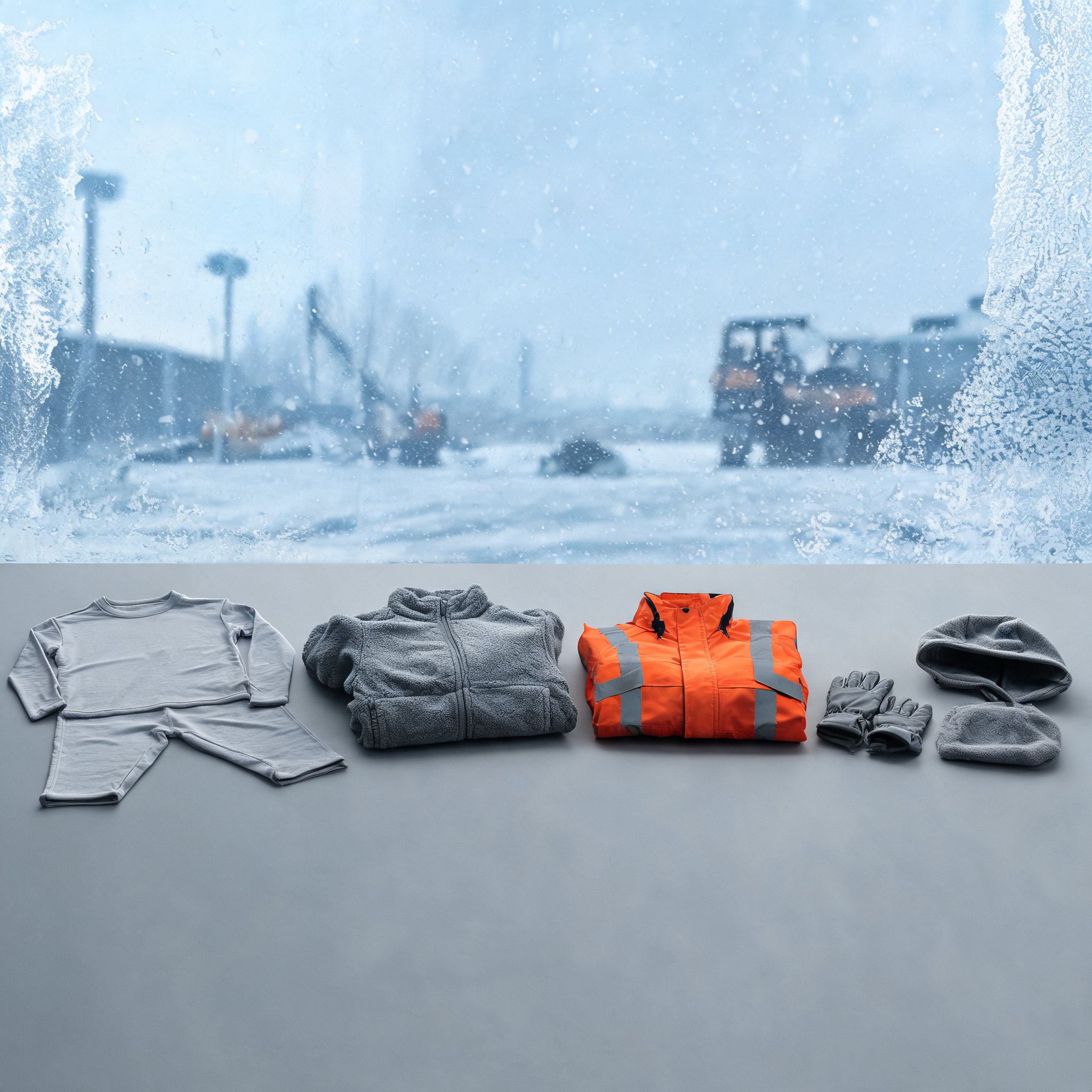
Outdoor work in winter raises risks for employees when personal protective equipment is chosen or combined incorrectly. CWS Workwear International GmbH of Dreieich has issued guidance describing five typical protection gaps in winter PPE.
Shorter days, wet conditions and frost change the hazard profile at many outdoor workplaces, the company notes, often without any adjustment being made to the protective equipment in use. In its assessment, the decisive weak point is not usually a single garment but the way the clothing layers interact. A jacket, an insulating mid-layer and a base layer may each carry valid certification, while the combination actually worn does not meet the requirements of the relevant standards.
That distinction matters for anyone specifying workwear. Certification applies to a garment or to a defined ensemble, so mixing items from different systems, or adding and removing layers on site, can take the assembled outfit outside the tested configuration. The guidance therefore treats protection gaps as a combination problem rather than a product defect.
The five gaps are presented as typical patterns in winter operations. The supplier's guidance points to reviewing how layers are put together, and not only whether each item carries a certificate, when outdoor work continues through cold, wet and dark conditions.